What Is Paralysis in Ayurveda?
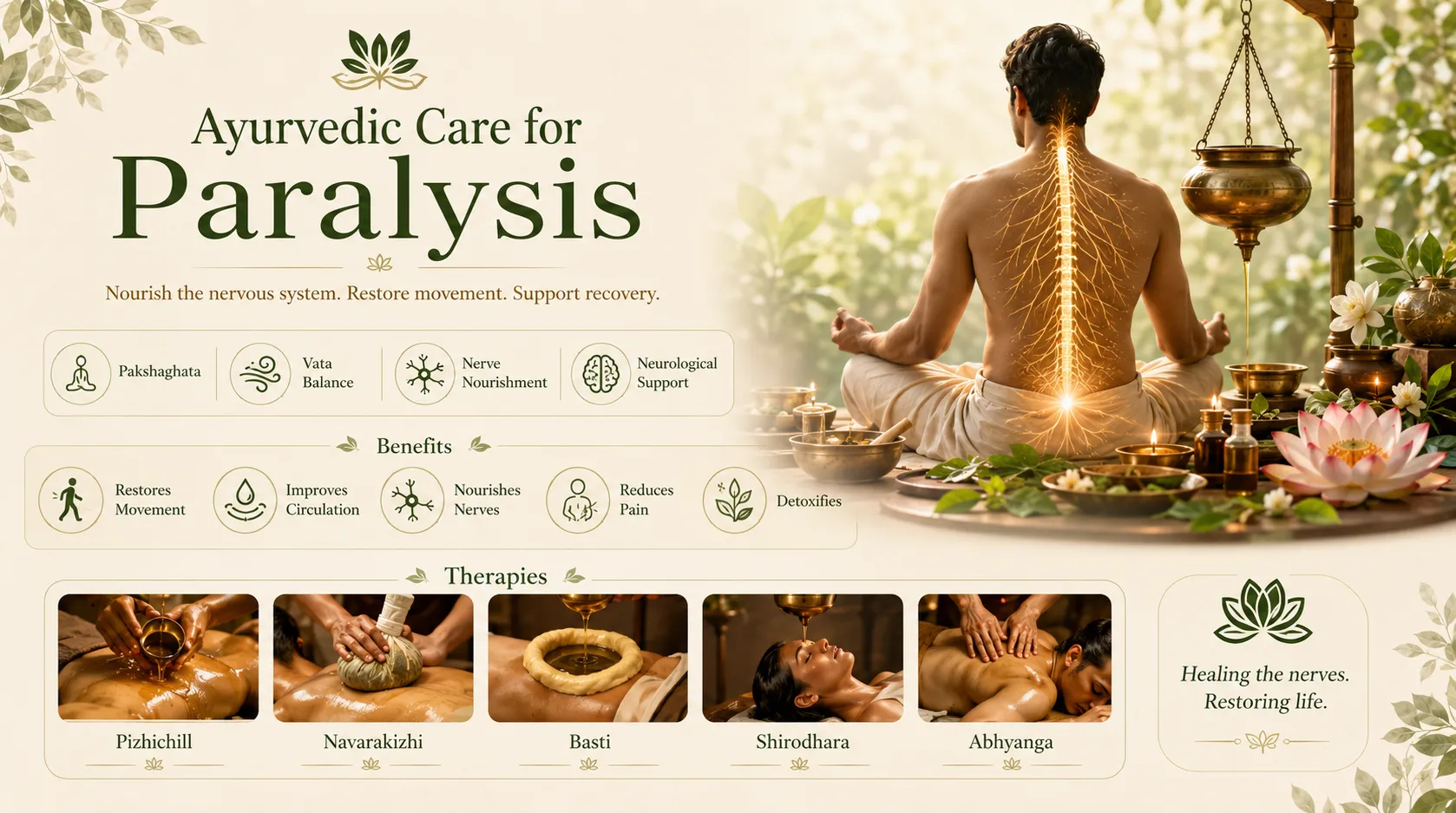
In Ayurveda, paralysis is known as Pakshaghata and is caused by extreme Vata dosha aggravation blocking the nervous system pathways (Vatavaha Srotas). This leads to loss of sensation and motor function. Treatment focuses on pacifying Vata dosha, nourishing nerve tissues (Majja Dhatu), clearing blocked channels, and progressively restoring neurological function.
Causes of Paralysis
- Severe Vata dosha aggravation
- Stroke (cerebrovascular accident) or TIA
- Spinal cord injury or nerve compression
- Brain trauma or neurological conditions
- Severe depletion of nerve tissues (Dhatu Kshaya)
- Toxin accumulation blocking neurological channels
- Bell's palsy or facial nerve disorders
Signs and Symptoms
- Loss of movement in limbs or face
- Reduced sensation or numbness
- Muscle weakness or wasting
- Difficulty with speech or swallowing
- Spasticity or abnormal muscle tone
- Loss of coordination and balance
Therapies Used
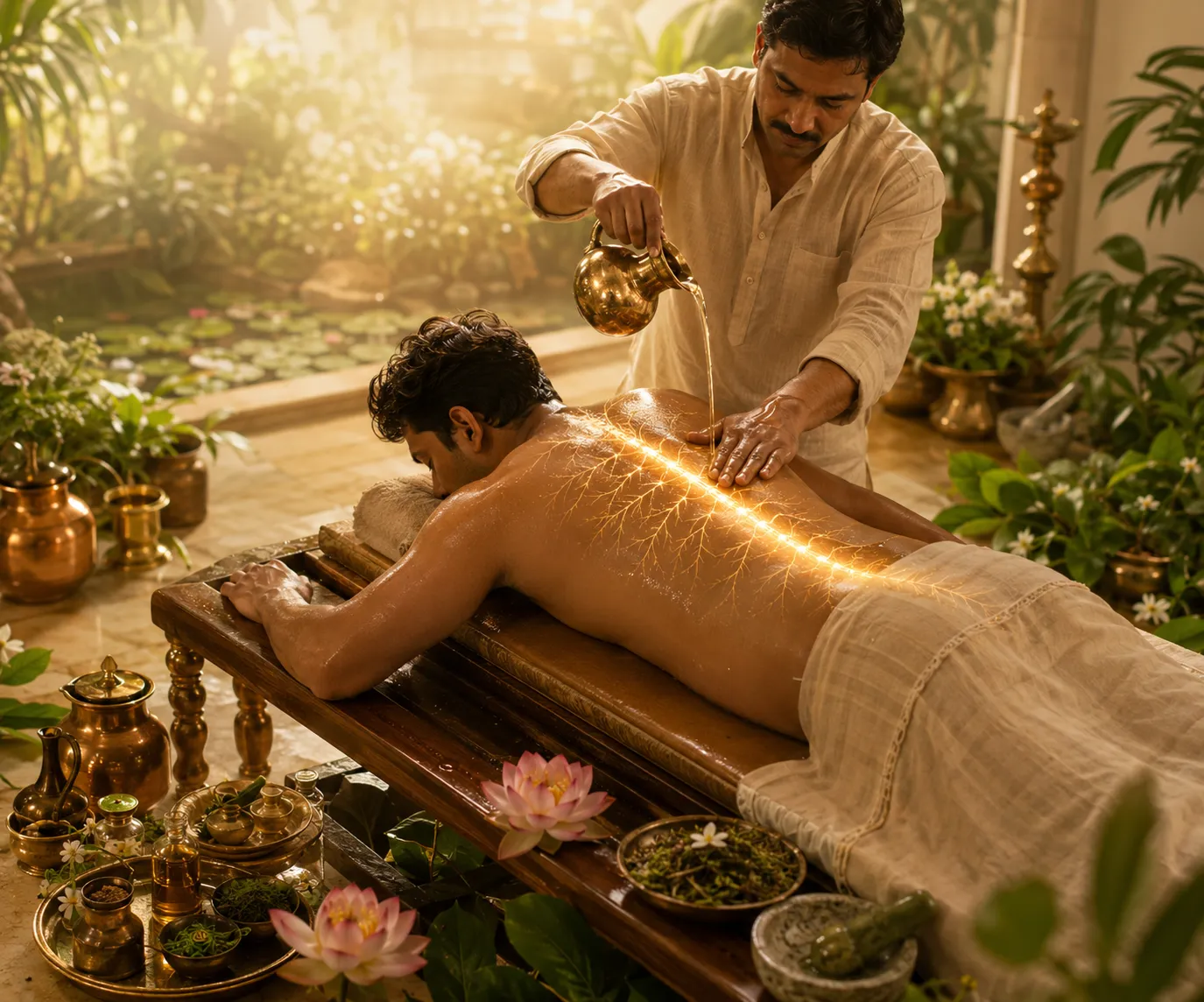
- Pizhichill – Warm oil bath therapy nourishing nerve tissues
- Navarakizhi – Medicated rice bolus massage for muscle strengthening
- Kati / Greeva / Pristha Basti – Oil pooling over spine and back
- Anuvasana / Niruha Basti – Enema therapy for deep Vata pacification
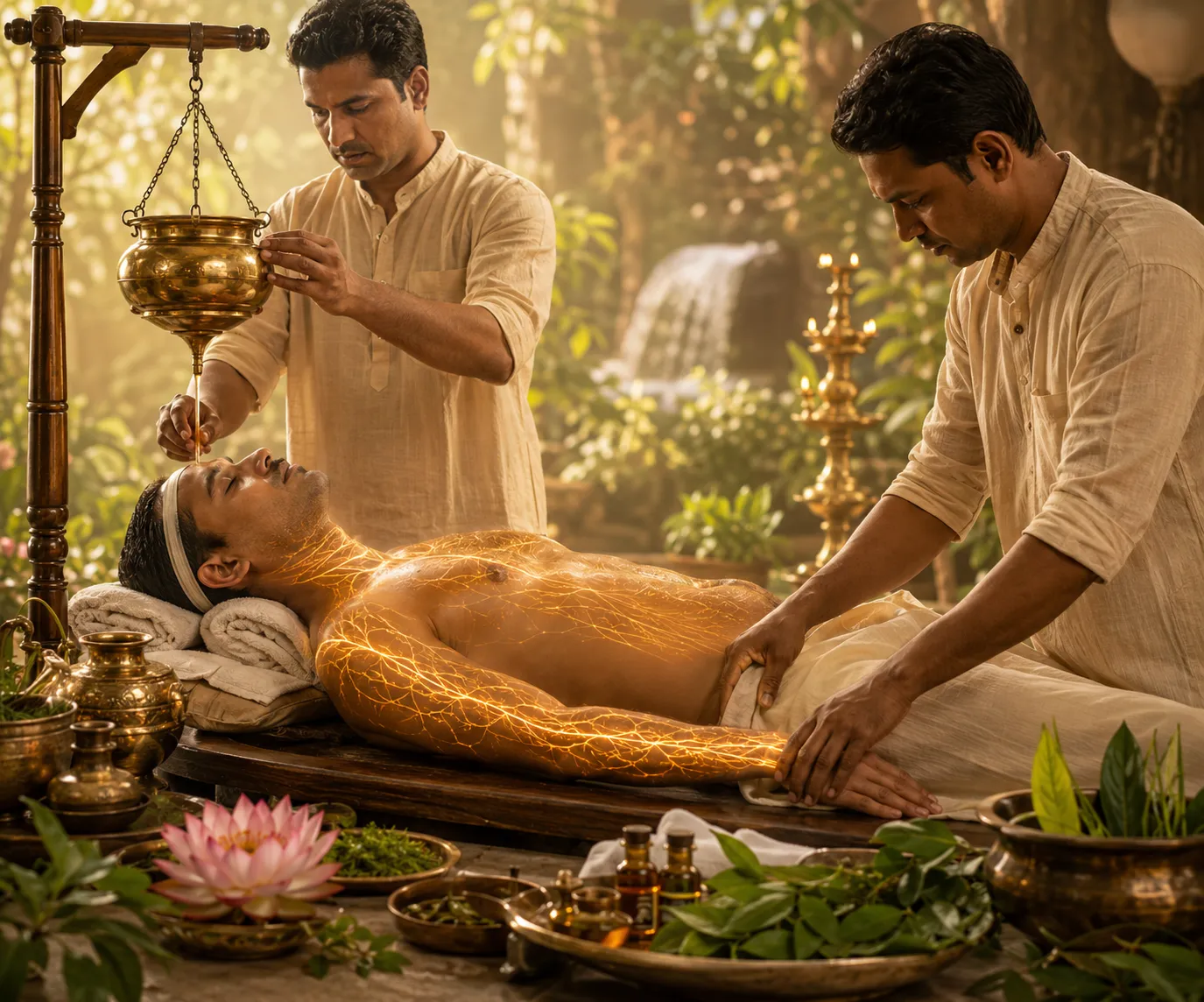
- Shirodhara – Oil flow therapy for brain and neurological nourishment
- Abhyanga – Intensive full-body oil massage to restore circulation
- Nasya – Nasal oil for brain and cranial nerve nourishment
Paralysis Treatment at 6 Panchkarma & Wellness Center Mumbai
Assessment includes detailed neurological evaluation, type and extent of paralysis, associated conditions, and overall health status. Treatment is conducted under medical supervision and integrates multiple therapies in a structured rehabilitation program for optimal recovery.